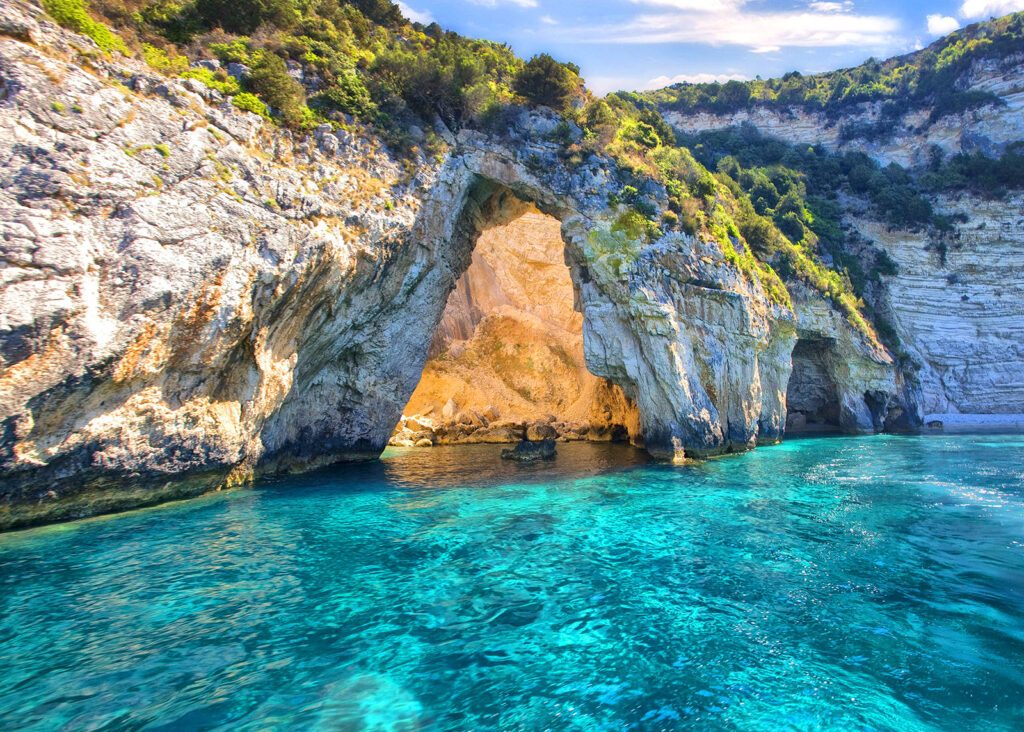
Blue Caves
These sea caves are located along the western coast of Paxos, carved into limestone cliffs by the Ionian Sea.
Observe the water from the boat deck for deep blue reflections.

A day cruise south from Corfu covers roughly 40 kilometres of open Ionian water before the limestone cliffs of Paxos come into view. What follows is the shape of a standard sailing day — where the boat pauses, how the hours divide, and why the sequence rarely changes. This corfu to paxos day trip itinerary guide sets out what to expect between departure and return.
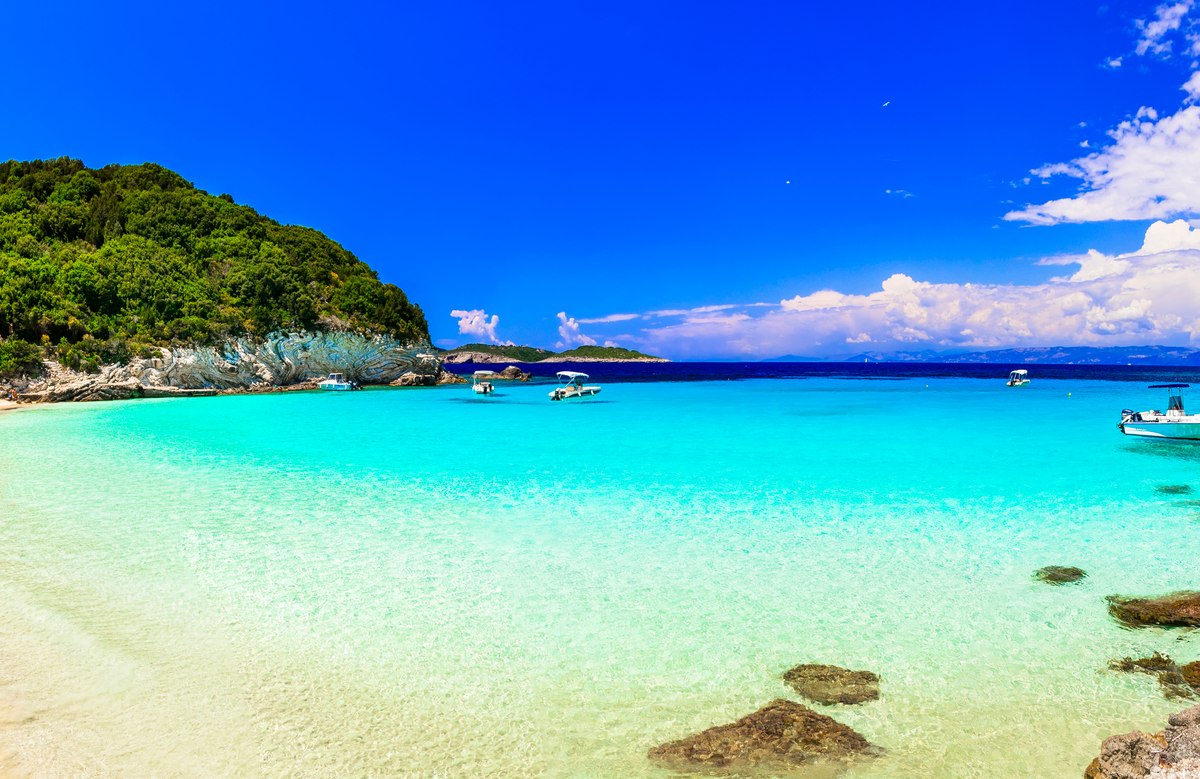
Quick answer
A standard Paxos and Antipaxos cruise runs as a full-day sailing, with an arrival window of 08:30–10:30 recommended to avoid midday crowds and peak heat at Vrika and Voutoumi. The islands themselves carry no entrance fee — 0 EUR, free entry, accessible only by boat — and are open around the clock, so the operator's schedule, not any gate, defines the day.
Paxos measures barely 25 square kilometres, yet it holds an estimated 200,000 olive trees — a density that shaped the island's economy for centuries and still defines the terraced slopes visible from the water. Local mythology credits its existence to Poseidon, who is said to have struck Corfu's southern tip with his trident to break off a quieter retreat. That geological punchline explains the coastline: sheer white cliffs on the west, sheltered coves on the east, and a chain of sea caves carved where the limestone meets the swell. Most visitors arrive with a fixed question — what actually happens between leaving Corfu and getting back. A corfu to paxos day trip itinerary is built around water conditions rather than opening times, since neither island charges admission and neither has a gate to queue at. The vessel typically tracks down the exposed western flank of Paxos first, where the Blue Caves, the Ortholithos sea stack and the arch at Tripitos are approached from the sea. Boats then round toward Antipaxos, the smaller southern neighbour known for its vineyards and for the pale sand of Vrika and Voutoumi. Gaios, the main harbour on Paxos, sits behind the wooded islet of Agios Nikolaos and serves as the shore stop for lunch, chapels and the narrow Venetian lanes behind the waterfront. Lakka and Loggos, the two northern anchorages, appear on some routings when the meltemi wind makes the western passage uncomfortable. Sea state is the variable that matters. Cave entries depend on swell height, and a Paxos and Antipaxos cruise that cannot enter the grottoes will substitute extra swimming time or an alternative cove — a substitution made at the skipper's discretion, not the passenger's. Reaching the beaches early in the recommended window makes a measurable difference, because the anchorages at Antipaxos hold only so many hulls before the water turns busy. Read the sequence rather than the clock. Knowing that the Paxos islands day tour moves west-to-south-to-harbour tells a visitor where to sit for shade, when to have swimwear ready, and which stop deserves the camera. The practical figures — schedules, costs, what to pack — sit in the dedicated sections below. Treat this corfu to paxos day trip itinerary as the frame, and use those panels to fill it in before booking a sailing.
“Sea state is the variable that matters: a cave entry is a decision made by the swell, not the schedule.”
This plan suits first-time visitors taking a standard full-day cruise from Corfu, with boarding in the 08:30–10:30 arrival window and roughly nine to ten hours from harbour departure to return. Paxos and Antipaxos are reachable only by boat, so the day runs to the vessel's schedule rather than your own.
Arrive at the quay 30 to 45 minutes before departure for boarding checks and seat selection. Upper decks fill first, so board early if you want shade or a rail spot.
The open-water leg takes roughly 60 to 90 minutes depending on vessel type and sea state. Swell is common on the second half, so stay seated if you are prone to motion sickness.
The boat slows along the sea caves and arches on the western cliffs of Paxos for about 30 to 40 minutes of viewing. Larger vessels pass by rather than enter, while smaller boats may nose into the wider openings.
Anchorage off Vrika or Voutoumi for 90 minutes to two hours of swimming and shore time. Tenders shuttle passengers in, so join the first run to maximise time ashore.
Two to three hours moored in Gaios, the main harbour village of Paxos, for walking the waterfront lanes and inland squares. Note the exact re-boarding time called by the crew, as departures are firm.
The homeward leg follows the same open-water route and lands back at the harbour in the early evening. Afternoon winds often make this crossing choppier than the morning one.
A day trip from Corfu to the Paxos islands reveals diverse geological formations and coastal landscapes. These locations represent the primary points of interest encountered during a standard cruise.
These sea caves are located along the western coast of Paxos, carved into limestone cliffs by the Ionian Sea.
Observe the water from the boat deck for deep blue reflections.
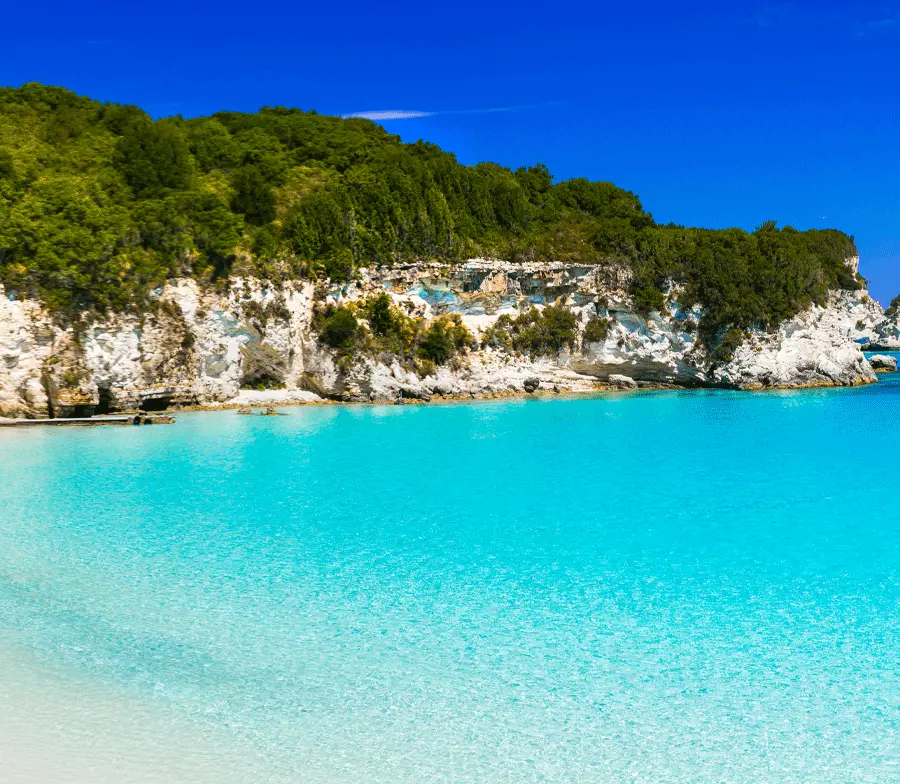
Situated on Antipaxos, this beach is characterized by its pale pebbles and shallow turquoise water.
Swim toward the rocky cliffs to see fish in clearer water.
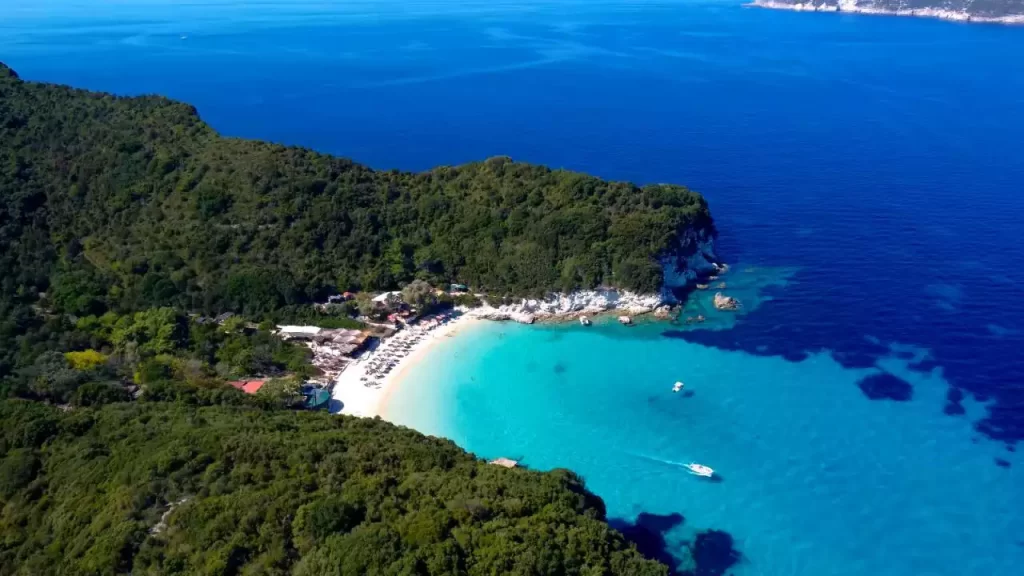
Also on Antipaxos, this sandy beach features a gentle shoreline and is often the primary swimming stop.
Arrive early to secure a spot before the afternoon sun peaks.
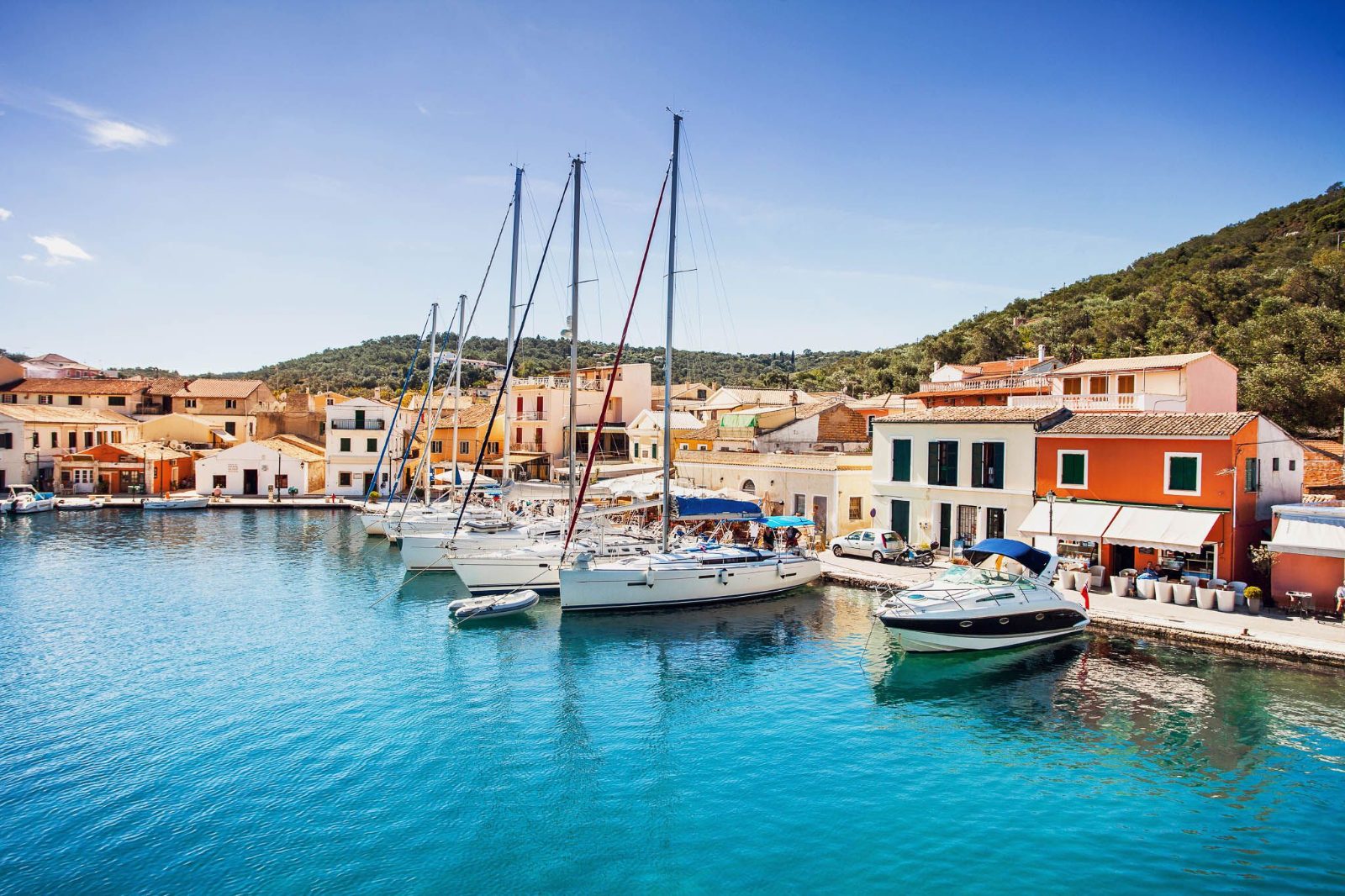
The main port town of Paxos, Gaios sits opposite the islet of Agios Nikolaos and offers narrow streets and traditional architecture.
Walk toward the town square to observe the local harbor activity.
The best arrival window for your trip is 08:30–10:30, which allows you to experience the beaches of Vrika and Voutoumi before midday crowds arrive. Planning your visit within this timeframe also helps you avoid the most intense heat of the afternoon.
Mild, 22°C–26°C. Ideal for swimming and exploration.
These months offer a balance of comfortable temperatures and manageable visitor numbers. Early arrivals maximize your time on the beaches.
Hot, 28°C–32°C. Requires early hydration and shade.
Visitor numbers are at their highest during these months. Arriving between 08:30 and 10:30 is essential to secure space at popular locations.
Pleasant, 22°C–27°C. Warm waters persist throughout the period.
Sea temperatures remain warm enough for swimming while foot traffic decreases. The morning window remains the most effective way to enjoy the sites in peace.
Verdict: For the quietest experience, aim for an 08:30–10:30 arrival window during the shoulder months of May or September.
The destinations of Paxos and Antipaxos remain accessible throughout the week, accommodating day trip arrivals from Corfu at any time.
Access to the islands of Paxos and Antipaxos is free of charge. Visitors only need to arrange boat transport to reach these locations.
Verdict: There is no entrance fee to visit the islands, though boat transport costs vary depending on the chosen departure service.
A short round of preparation — booking the crossing, sorting documents, and packing the right gear — covers everything the day cruise itself does not provide.
Everything you need to know about corfu to paxos day trip itinerary
A standard corfu to paxos day trip itinerary typically covers visits to the coastal settlements of Paxos, the sandy shores of Antipaxos, and the scenic Blue Caves. Travelers often experience swimming stops in turquoise waters before returning to Corfu.
Access to these destinations is strictly by boat, as there is no airport on the islands. You can book a seat on a larger cruise vessel or a private charter to complete your corfu to paxos day trip itinerary.
The best arrival window is between 08:30 and 10:30 to avoid midday crowds and peak heat at popular locations like Vrika and Voutoumi beaches. Early arrival ensures a more comfortable experience during your island hopping tour.
There is 0 EUR entrance fee as the area is a natural destination accessible only by boat. This policy applies to the public spaces you will explore during your corfu to paxos day trip itinerary.
Yes, many boat trips include a passage through the Blue Caves, which are famous for their reflective water and geological formations. These are usually visited as part of the maritime route between the two main islands.
Pack swimwear, high-SPF sunscreen, a hat, and comfortable footwear suitable for boat decks and rocky terrain. Carrying a reusable water bottle is also recommended to stay hydrated throughout the Mediterranean sun.
The islands are open to visitors from Monday through Sunday, 00:00 to 23:59. You should check specific departure times for ferries or local sea excursions to ensure they align with your travel plans.